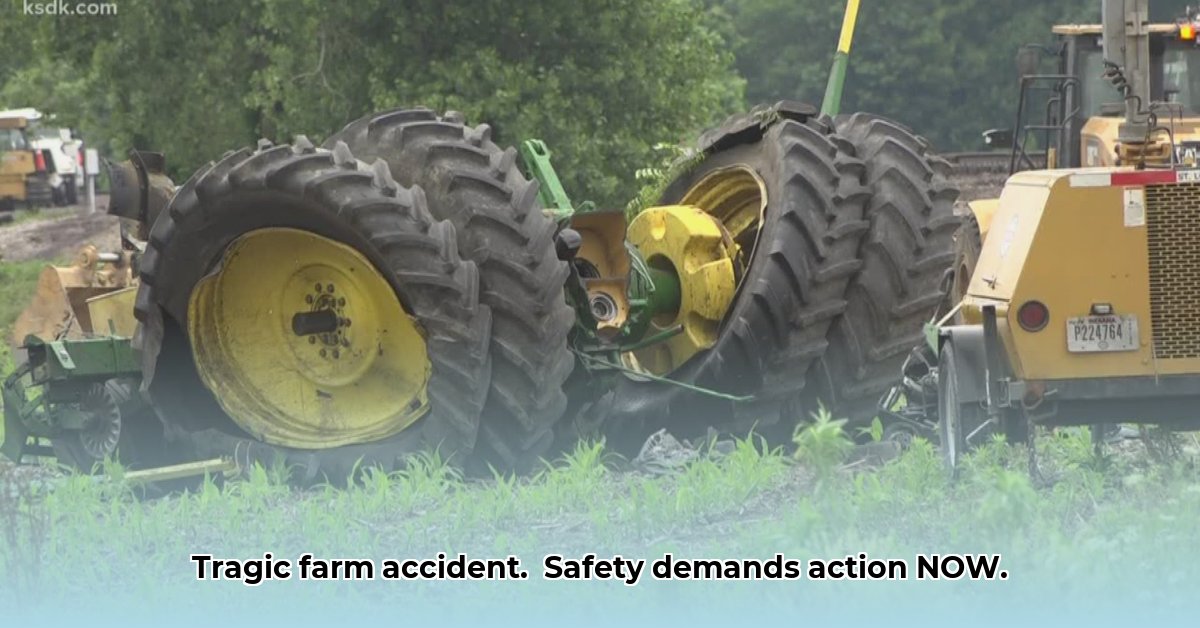
Man Killed in Tractor Accident Yesterday: A Preventable Tragedy
A farmer tragically lost his life yesterday in a tractor accident, a devastating event highlighting the urgent need for improved farm safety practices. This isn't simply a single incident; it's a stark reminder of the pervasive dangers inherent in agricultural work, demanding immediate and comprehensive action. The preventable nature of many farm fatalities underscores the critical need for systemic change. This accident, while specific in its loss, represents a larger crisis demanding our attention. For more details on this specific incident, see this report.
The Accident and Its Unanswered Questions
Reports from MSN and WQOW regarding the accident remain limited, providing few concrete details about the immediate cause. Possible contributing factors, such as operator distraction or equipment malfunction, are suggested but remain unconfirmed pending a full investigation. This lack of comprehensive information highlights a critical gap in post-accident data collection, hindering our ability to effectively analyze and prevent similar occurrences. The lack of specific details underscores the need for a more robust reporting system. The investigation is ongoing, and we await the full details.
The Deadly Combination: Human Error, Mechanical Failure, and Environmental Challenges
Tractor accidents, particularly rollovers, constitute a significant portion of agricultural fatalities. This stems from a complex interplay of factors:
Human Error: Distraction, fatigue, and improper training significantly contribute to accidents. Farmers often juggle multiple tasks, leading to lapses in attention while operating heavy machinery. The demanding nature of farm work, often involving long hours and strenuous labor, increases the likelihood of fatigue-related incidents. Inadequate training leaves many workers unprepared for the inherent risks.
Mechanical Failures: Aging equipment, neglected maintenance, and the absence of vital safety features such as Rollover Protection Structures (ROPS) (protective frames that prevent the tractor from rolling over onto the operator) dramatically increase the risk of serious injury or death. Many older tractors lack modern safety innovations. Regular maintenance, early detection of problems, and prompt repairs are paramount.
Environmental Factors: Challenging terrain, poor visibility in tall crops or low light conditions, unexpected obstacles, and inclement weather further complicate safe operation. Farmers work in unpredictable environments, increasing the possibility of accidents.
Beyond Individual Responsibility: A Systemic Approach to Farm Safety
This tragic event isn't an isolated incident; it reflects a systemic problem demanding a multifaceted solution. A comprehensive strategy requires action on several fronts:
Transforming Training: Mandatory, comprehensive safety training is crucial. This should move beyond basic operation, encompassing hazard recognition, emergency response, and regular maintenance procedures. Regular refresher courses and training focused on new technology and equipment are necessary.
Technological Advancements: Modern safety technology, including ROPS, seatbelts, automatic stability control, and advanced driver-assistance systems (ADAS), can significantly mitigate risks. Investing in and promoting these technologies is essential.
Strengthening Regulations and Enforcement: Robust safety regulations, coupled with rigorous enforcement, are crucial. Regular inspections ensure compliance, while substantial penalties for violations encourage adherence to safety protocols.
A Call to Action: Steps Towards Safer Farms
Preventing future tragedies necessitates both short-term and long-term strategies:
Immediate Actions (Within 1 Year):
- Enhance Safety Training: Implement mandatory refresher courses focusing on practical skills and hazard identification. (Efficacy target: 80% participation rate among farmers within the next year).
- Promote Safety Equipment: Offer incentives, such as financial assistance or tax breaks, for adopting ROPS and other safety technologies. (Goal: 50% increase in adoption of ROPS within two years).
- Improve Farm Protocols: Develop and enforce comprehensive safety protocols that include incident reporting, equipment maintenance schedules, and emergency response plans. (Expected improvement: 15% reduction in equipment-related incidents).
Long-Term Strategies (3-5 Years):
- Embrace Technological Advancements: Promote the widespread integration of advanced safety technologies in tractor design, including auto-braking and stability systems, thereby significantly preventing accidents. (Target: 90% tractor sales to include at least 2 safety technologies by 2028).
- Integrate Safety into Education: Incorporate farm safety training into agricultural education programs, ensuring future generations are equipped with the necessary knowledge and skills. (Projected: 100% inclusion of farm safety curriculum in agricultural schools).
- Strengthen Safety Standards: Develop and implement stricter design standards for tractors, prioritizing safety features. (Target: 95% compliance within 5 years).
The death of this farmer serves as a wake-up call. We must combine efforts – farmers, manufacturers, policymakers, and the public – to create a safer work environment for all. The cost of inaction is far too high. Let's act decisively to prevent future tragedies through improved safety standards, investment in technology and comprehensive training.